A wide-ranging and necessary conversation with composer and performer Colin Self about redefining "health" for ambitious creators. Colin discusses re-orienting their practice toward attunement—the daily skill of noticing relationships between self, others, and the environment.
A wide-ranging and necessary conversation with composer and performer Colin Self about redefining "health" for ambitious creators. Colin discusses re-orienting their practice toward attunement: the daily skill of noticing relationships between self, others, and the environment.
We explore why, after major institutional commissions, smaller rooms often hold bigger truths. The dialogue traces how tech burnout led them toward physical craft and the building trades, uncovering why this grounded, embodied work is a vital counterweight to an over-accelerated culture.
Roddy Schrock: Colin, thanks for being here. For those who don’t know, Colin Self composes music, performance, and environments that expand consciousness and trouble binaries as well as boundaries of perception and communication. They work with communities across disciplines and use immaterial and material means — including voices, bodies, and computers — to interface and reimagine worlds. Self currently lives between Berlin and New York, and Colin, I think I’m catching you today in Portland. We were just chatting before I hit record. It’s so lovely to catch up and hear about some of your plans. Do you want to share a little bit about what brings you to Portland at this time?
Colin Self: The beginning of a general contracting journey! I’m doing an apprenticeship here with my dad, who is an engineer and has been building for over 30 years — definitely more than 30 years if I’m 37. I’m learning everything from how to replace fence posts to installing outlets, learning about the fundamentals of electrical and plumbing, building A-frames, HVAC, pouring concrete. I have another friend out here in Hood River, Oregon, who I’ll be helping with his building projects next year. In the long-term, I have visions of having an all-queer and trans general contracting company and becoming an educator of these different building practices that I can hopefully pass on to others during times of change.
Roddy: I love it. I think that’s amazing. Before I hit record, you were sharing a little bit about what it’s like to work in communities that are outside of what we consider the art world or the performance world. My partner and I moved to rural Massachusetts a couple of years ago, so we’re out in the woods. I have to say, it has been so rewarding to get to know people that are a little bit outside of my comfort zone and to spend time with people that I just wouldn’t have had access to in my prior career and geopolitical social situation. I just want more of that, honestly. I think that’s so good — to be able to connect with people that, at other points in my life, I wouldn’t have felt as open to even interfacing with.
Rural Communities and Expanding Perspectives
Press enter or click to view image in full size
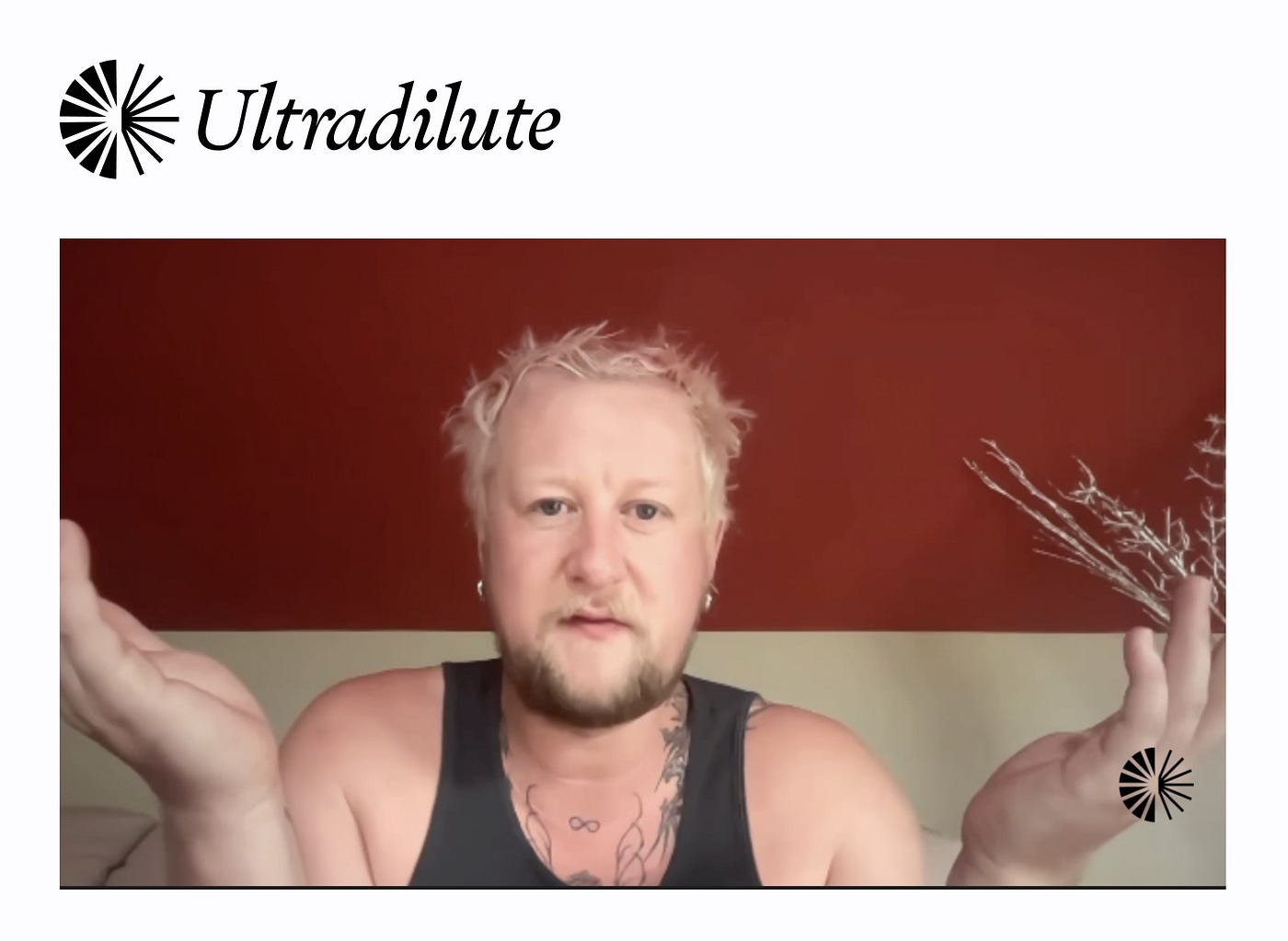
Colin: It reminds me — I just was at this thing that happens outside of Pittsburgh called Honcho Campout. It’s a queer camping festival with music and conversations. There was one conversation specifically that really felt like this: so much of the center of the campout was this conversation between Viva Ruiz and Neon Christina, friends from my New York community. They were both sharing stories of a somewhat self-imposed bias about how they were essentially afraid of rural communities or non-sanctuary places — like, “If I go there, I’m immediately going to be attacked or in danger.” Then upon actually going to these places, they realized, “Oh, there’s my own internalized classism or racism or anti-Blackness.” You know, all these different things about where people think they’re going to be welcomed and safe. Actually, you’re not so often in imminent danger in these places the way that we imagine.
Of course, there are those scary moments where in rural communities you’ll see the truck drive by with the white nationalist flags and you think, “Okay, I’m really out here.” But then there are also people out there. I think there’s a growing sea change and migration — people for many different reasons needing to spend time and transform their relationship to these more rural parts of where we live.
Roddy: Totally. I think it’s a two-way street. People in some of these more isolated areas maybe don’t have conversations with people from different backgrounds or queer and trans communities as often. As soon as they have a few of those conversations, it creates such a sea change even for the local community to be more open. It just grows exponentially.
Colin: Right! In the Appalachians, where they recently had these floods, there was this article about how all of a sudden on the ground you had queer anarcho-punks and church moms and dudes with their chainsaws — all working together. Like, “Okay, you’re gonna babysit the kids while we go get safe water, and these people are gonna help clear the thing so your friend can drive this truck through so we’re all going to be okay.” We know this from Rebecca Solnit and other authors who help us understand that in times of disaster, people don’t turn on one another and kill each other — they’re usually pushed into a place of humanity. That’s so integral to this bigger imagination about what that could be like.
Roddy: That’s so beautiful to hear. That sort of brings me to something I wanted to ask you: What field or fields would you place your work in? When we were talking earlier, you mentioned that this feels like a continuation of your art practice. I’d love to hear more about where you situate yourself in terms of fields you may be coming from or moving towards.
Health, Art Practice, and Community
Colin: When you first sent this invitation and said it was about health, I was like, “What does my work have to do with health?” Then I was like, “Wait a minute — all of these different things that I do are about taking care of and fostering communities, even in temporary assembly.” From this group singing choir practice that I’ve been doing for 13 years, to “How to Survive Winter in New York” — a publicly authored resource distribution of information — to this meditation group I had on Telegram during the pandemic lockdown. There seems to be something throughout my practice as an artist that has to do with bringing people together to help transform their perception of what is possible or what they’re capable of doing.
That can look so many different ways, but so often it revolves around making performance or sound or using the voice. So much of it is also about temporary assembly — this idea that you can get together with a group of people, sometimes your community, sometimes strangers, and you can be changed by bearing witness to your collective power and also your role within it. Your agency within a group to be an agent of change yourself. Hopefully inspiring people to realize that this isn’t just a Colin Self thing — anyone can be in that position.
Roddy: I remember when you organized the temporary community group singing project during the Heather Dewey-Hagborg and Chelsea Manning exhibit that I curated at Fridman Gallery. That was closer to a decade ago now, actually. It’s hard for me to articulate the alignment with that project with how we might commonly understand health, but I do very much intuitively see how your work aligns with so many ways of defining health. Do you have a working definition of health for yourself?
Colin: I thought about this before our conversation and asked myself what the word health means to me outside of the prescriptive, common understanding of what that word means. I was able to think about it as something that exists between, in, and through relationships — our relationships to ourselves but then also our relationships to others in the world. There’s something for me about perception and awareness — we move through these fields of consciousness, whether it’s somatic awareness or consciousness around what’s happening around you and to the people and the environment that you are inside of.
There’s also this thing about consciousness practice where health for me has so much to do with — I don’t want to say it’s a frequency, but it does feel like it’s something you attune to or something that you can with your mind be present to, and your body really be present to it. I have a very funny relationship to time — I will talk to time because I think time is a sentient part of the universe. I feel the same way about health or something. It feels as though it’s something that you can attune to or move towards. That’s maybe a very woo-woo way of saying it, but I think on a fundamental level there’s something about relationships.
Roddy: It totally makes sense. There are so many things that get put under the woo-woo category, but it really means in many cases that it has something to do with something that’s immaterial or intangible. There’s so much of the world that we just don’t know. To at least be open to the possibilities of attuning ourselves to these other forces or dimensions seems like a very rational thing to be curious about.
Colin: I think about a really simple way of demonstrating what you’re saying: something like meditation or prayer or a practice that has to do with being with consciousness — with or without a spiritual practice attached to it, with or without a religious practice — is a really good example. There are tangible things that you can notice that are different about those things. I’ve spent so much time in the last few years learning about all of these different things that the contemporary world deems woo-woo because it’s also from a place that would challenge the paradigms or dynamics of how the medical industry or certain industries are able to operate.
As Americans, if you live within the American healthcare system and you see the way in which it’s built to break people and keep people sick — over time you’re like, “Oh right, this is why there’s people who have to move away from that.” But then you do get into scary territory. There are always people who are — I was trying to put words to this — the extreme anti-vaxxers who have kind of appropriated woo-woo. There’s that clip of the woman where she’s like, “Lyme disease is a gift from another dimension.” God, no! They call themselves counter-cultural, and it’s like, “No, girl, you’re not. This is not counter-culture.” There does have to be some kind of discernment around these things in the world on the periphery.
It’s a shame that also those things — it almost feels like manufactured opposition in the sense that in trying to devalue and create a stigma around something like homeopathic medicine or non-Western medicine, there are these viral pieces of media that just make it look like it’s all gobbledygook.
Roddy: Yeah, I know. It’s so interesting. It’s been such a learning experience for me to begin with homeopathy. I’ll be the first to acknowledge that a lot of people see it as placebo effect or just water, et cetera. I don’t exactly know how it works — there’s still a lot of research being done to try to explain it. At the same time, I see its efficacy in my own life and others. I’ve learned more about its extraordinary history of usage, particularly in Europe. To this day, in Switzerland it’s covered by insurance and seen as a very mainstream form of medicine. It’s so funny to see these fields get put into these political lanes or social lanes. I find that quite confusing. I honestly just try to ignore it and just be like, “Hey, all of this is defense against psychic warfare.” You can’t discount these things as being weaponized against things that work or actual systems or viable solutions for health.
Colin: Living in Berlin for the last decade — if there’s one good thing I can say about Germany, which I don’t really love as a nation at the moment — I have an incredible GP who is half Chinese, half German, who really takes a dualistic approach of Eastern and Western medicine. It’s a lot of “let’s look at this from a homeopathic perspective and what can we do fundamentally about preventative medicine or taking the form of daily practices, and if that doesn’t work, what antibiotics should we use?” Acknowledging the efficacy of other medical things and having access to a GP like that is so invaluable. It’s had such a big impact on my life.
Roddy: I hear you. That’s kind of my dream — for homeopathic medicine or traditional Chinese medicine to just be a form of treatment that can be in conjunction with more conventional treatment or not, but just to have it be available. It just seems like it would be so helpful.
Technology, AI, and Material Practice
Roddy: I want to talk about you and what you’re doing. It’s been such a joy following your career over the years and seeing the breadth of your practice in so many different areas. I first got to know your work from a technological perspective. Where do you feel like you’re at in terms of your relationship to technology and your practice? You’ve worked with people like Holly Herndon. Do you feel like that’s evolved over the years?
Colin: I’m conscious and aware of the fact that when I was younger, the topic and presence of technology was so much rooted in actually using computers and being a part of machine processing and information and all the tools that come from computers. Something big happened leading into pandemic lockdown time — because of what so many of us experienced as computational burnout or the need to move away from screens — that got me to begin to think about all the different technologies and methodologies that exist outside of screen world or screen land.
That has turned into performance and music and also a sort of politic that is not so deeply rooted in this idea of the necessity to become more advanced. I think a lot of us have seen the negative effects of AI and the technocracy. I’ve really been drawn to asking myself about what we need to root ourselves in amidst a fascist technocracy that’s not going away, AI that’s going to very soon be AGI, and the ubiquitous inclusion of this thing in our day-to-day lives that’s going to drastically determine so much of our future. How do we set stakes in the physical material world during a time when you have a ruling class that’s very much interested in the total decimation of physical reality and end-times fascism as the sort of center root of leaving behind the physical world and our physical bodies?
When I was younger, I was so enamored by all of these different concepts and writers who made their practice about cyborgs and the ways in which we were implicated and born automatically into these technology systems. Something has changed where I think we’ve reached the other side of not only seeing the problem that my generation has created in terms of this Silicon Valley promise, but then also seeing all the fundamental ways in which that makes us all sick and broken. On all sides of the coin — or really more than a binary — seeing the ways in which all people are affected socially, politically, financially by the class war that exists inside of technology politics today and the conversations around AGI.
There are all these people creating forums about the media landscape, but there are massive blind spots with so many of these conversations. It almost feels to me like manufactured opposition — like this is created by the right as what we’re supposed to believe is the voice of the left or the centrist. We’re bearing witness to a siloing of the conversation around all of these social and political things around health and bodies and eugenics. It sucks. On a fundamental level, it’s boring. You listen to these conversations and you’re like, “I can’t believe this is your imagination. That’s all you can dream up as a solution?”
I’m also in a funny situation right now where so many people are like, “Why would you move to America? Why would you live in America during a time of collapse?” I think so many people are thinking about this time as being an ending, but there are so many endings happening at all times right now. A death is not an ending — it’s a transformation. It becomes something else. We need people to be present to dreaming forward different things to be possible. It’s the same reason why I have Palestinian friends who refuse to leave Berlin, Germany. They’re like, “No, they want us to leave.” It’s hard to take that path, but I think it’s important.
Roddy: I really appreciate you saying what you’re saying because it’s refreshing to hear someone who has a history in creative technology and understands how people are thinking creatively about technology. I’m right there with you. I read conversations about AI or see headlines, and I’m always struck by how we’re always having the wrong conversations about AI or technology. I don’t feel like anyone’s really grappling with, as you pointed out, so many of the class issues that feel so present around the way that technology is being developed right now. Also, the weird assumption that people have around technology — that it’s somehow neutral or that it doesn’t have a bias or an agenda. Those are the things that would be very healthy for us to talk about.
My partner is a writer, and he won’t even go to ChatGPT to experiment, quote unquote. He’s like, “Absolutely not.” So many people I know are like that. The jig is up when you create a public resource for people and then immediately the people who use that resource are negatively affected by the technology.
Colin: There’s no space for these types of conversations to happen inside those communities. If and when I ever bring it up, it’s immediately shut down. They say, “This is just how the world is” or “It’s not as bad as you think it is.” It’s the same logic that’s used to justify genocide or eugenics. What’s also sad and scary to me is I think it’s mostly a class war thing that I’m bearing witness to. If you exist within a realm of wealth or you identify with your wealth, you don’t think about it — it becomes the number one way in which you understand things. These critiques of AI or technology become classified as being “woke” or “identity politics.” It’s like, “No, I’m actually literally just talking about people in Mississippi being poisoned.”
I might also put this into my own life: my parents live here in Oregon in a somewhat rural community, and they’re trying to build a huge data processing center here that would decimate the water access. I’m like, “Why have people not — “ In Berlin you have these people lighting Teslas on fire. Why are people not lighting these plants on fire? It’s class warfare. Then they do this thing where they’re like, “Oh, we’re going to incarcerate you if you protest or put the property of this thing being built in danger.” But I’m like, we’re gonna see much crazier class warfare in the forms of more and more resources being siloed to support these generators without any consent from a local population.
Roddy: I’m really glad you’re talking about that. I don’t feel like I talk to enough people who are addressing these issues. I come from the South near Memphis, Tennessee, and there’s a new data center going up and pushing Black communities out of neighborhoods they’ve lived in for generations. Then there’s the environmental damage that comes with it. The company that’s building it is giving a little money to a nonprofit nearby to somehow make everything okay. It’s really gross. I wish there was more outcry about these things, but so many times, as you said, there’s a manufactured sense of inevitability about it that makes everyone feel like this is just what’s happening.
Colin: Yeah. I just sort of talk about these things in terms of my art practice, but at the same time, I’ve watched — I’m kind of on my way out of Berlin, and one of the reasons is that there’s been a dissolve of a social landscape there and a creative landscape there. There’s a need or desire in my own life for thinking about these very human physical things that are going to impact the next decades of my life. I think about physical space — one of my goals is to create buildings, hopefully multiple places, venues, studios, places where people can come not just for sanctuary but to make performance, to make their work.
A part of doing that is also accruing — I think about this in terms of the people who are often on a different side than I am in talking about technology and politics as it relates to our health. Those people have never been involved in manual labor. They’ve never done manual labor. I sound like such a “you don’t know what hard work is like” person, but I’m like, there is something that you learn from the physical experience of creating a roof deck or replacing fence posts or spreading bark or mulch so the soil works so you’re able to grow food. There’s so much that’s such a vital world of information from which we’ve been so disconnected beyond farming. People always think, “Oh, that’s only for farmers,” but I’m like, “No, there is no inside/outside with who can be learning these things and doing these things.”
I think a big part of it also has to do with how much we devalue and hide labor politics and our practices of where things get made, how things get made. We still have bodies. Our consciousness still takes place in a body.
Optimism and Building Alternative Systems
Roddy: What are some of the things that you feel optimistic about now? What are you seeing as really positive paths forward for yourself and culture?
Colin: What I realized — people come to Colin Self for me to make them feel like — is every — people want me to help them understand that they’re not doomed and everything. Me and my friend Monica use this term “doom slayer,” which feels very much what our MO is based in. It’s this idea that we live inside of manufactured doom, but we are doom slayers.
The things that I’m really excited about: three years ago Monica and I started a performance school that takes place in Lincolnville, Maine currently. It’s one incredible thread of something that we spent five years building with this desire to have a performance practice or a center where we could bring people together to facilitate a performance community and connect people with performers all around the world. Even though it’s only three years in, seeing the effects of that as it exists beyond the short time that we get together each September has been really inspiring.
For me, one of the main things that is inspiring is being in this world of construction and building. In the media landscape and the kind of conversation of what information and knowledge is passed around within the art and technology world feels small when you spend your time with wood and metal and plants and soil, when you’re taking care of land and figuring out how to install outlets in the ceiling and doing all of these things. Having a physical material practice and doing so as a social thing where you’re really with people — it gives me so much hope and inspiration to see what can happen amidst a group of people while also in this physical state of working on something together.
There are all these parallels for me between a performance practice where you have a shared goal with a group of people and through communication and through a set of tools you have to complete this task of creating this ephemeral thing, and then you have a similar thing with building, but at the very end you have a very physically tangible thing in front of you that you can say, “Look, we did this.” It’s why so many organizations exist to help like Habitat for Humanity or these projects where they get people together to build physical homes or structures. You see the direct impact it has on your life and other people’s lives.
Regardless of where technology goes, for me particularly, there’s such a wealth of knowledge to be accrued in the form of spending a decade or more in my life learning about all of these building practices and then passing those things forward. I’m also interested in it as a person who creates music and performance — I’m interested in the narrative quality of being in these worlds and the life that exists and the information that comes from spending your days this way instead of in front of a computer. I think so many people are so brain-rotted and spiritually bankrupt because they’re just having everything sucked out of them — the life sucked out of them from a computer screen. We’ve all felt it. I sound like one of these people who’s like “the internet’s the devil,” and it’s not that at all, but there’s something to it.
The last years I’ve been so inspired by this mentor I have, Augusto Machado, who was a part of the Playhouse of the Ridiculous and the Cockettes and the Angels of Light. He was a central figure in this playful, curious world of performance that existed really on behalf of the people who were living and working in New York City in the ’60s into the ’70s. I think about in my own life — a really great example: I had this big commission from the state opera in Germany. I made this trilogy and spent all this time and energy making this really big production. I had a pretty bad experience working with the German bureaucracy. Then immediately after, I made a play with four other cast members and some puppets that I had built, and we performed at the New Theater Hollywood and sold out all these shows. All of a sudden I was like, “Okay, so here’s a much smaller community of people gathering together, having a much more meaningful experience, telling stories that really are received by people who understand and have a context for why we’re here in this room together.”
It was a big wake-up call for me about what once was my desire or imagination — that the bigger you get in scale, the more successful you are or the better your art is. So much of the last few years has helped me understand that that logic of “bigger is better” is just not the case in terms of art-making. So often the most beautiful and meaningful works — this is also the world of puppetry — the best shows that you’re gonna see are gonna have an audience of 20 people or 50 people.
I’m thinking about that as we move through time in this very strange paradigm where we’re kind of moving away from a certain type of dreaming or fantasy about what technology was going to be generationally. There is so much meaningfulness and value in these local communities. It’s maybe a privilege that I have that I grew up in these little underground scenes and got to bear witness to what was possible. It feels like bringing that back to the center and letting people know that it still exists. Just because it’s not the dominant narrative doesn’t mean that it isn’t happening.
Roddy: Do you feel like there’s a resurgence of that localized, independent, more community-based art practice? Is that something that you’re seeing more of?
Colin: I spend a lot of time in all these different places as my job. My main job for the last decade has been touring. There has been a really crazy uptick. For the record that I put out in February, I’ve been touring a live show where I work with a local community in each city. Sometimes those people are a pre-existing ensemble, and sometimes they’re just performers who show up. Luckily, because of what I do, it tends to be some pretty freaky amazing weirdos who are down to learn some music and choreography.
One of the reasons why I wanted to do this tour is I also wanted to understand the social and creative dynamics of all these different places that I’m performing in. In doing so, I’ve found that a lot of these people are like, “Oh yeah, I have a space in my backyard or my friend’s studio, and we have a group singing project or we have this performance group and we make drag shows here on Wednesday.” Connecting and being with people in my performance practice as the arranger of elements in these temporary assemblies helps put me in touch with all of these different groups of people. Los Angeles, New York, the Hague — anywhere you go in the world, you’re like, “Oh, there’s people doing this.” We’re really not alone in our desire and action towards creating alternative systems.
A lot of these people also don’t have social media accounts. They’re not interested in — especially this younger generation, these people in their 20s — they’re like, “I would never have Instagram. Fuck the psychic warfare of social media. I make all of my art. You can contact me on Signal, but I don’t even have a smartphone.” There’s a ton of people doing those things. I don’t know if it’s an uptick, but it’s definitely my conscious awareness of those people because I’m around them all the time.
Roddy: That’s really great to hear for so many reasons. It aligns with observations that I’ve had in the last few years in particular. I’m really glad to hear that you’re seeing that.
Current and Upcoming Projects
Roddy: You’re working on so many things. I think you have a few projects that are coming to fruition in the next months if I’m not mistaken. Could you talk a little bit about where your practice is reaching some cadence points that people might be able to interact with or engage with?
Colin: I had a music record come out in February, and I’ve been spending most of this year promoting and touring that live show called *Gasp*, which is very much about this conversation between the world of the living and the non-living and essentially turning stages into these temporary shrines where we can create a ceremony for that dialogue in a way that’s both playful and reverent at the same time. There’s more shows of that coming up in the fall. I’ll do a little bit more touring in Europe.
I also started this performance school with my friend Monica, and we are in our third year that will be taking place in Maine at the beginning of September. I teach part-time in Berlin, and then I’ll be guest teaching at a school in Louisville, Kentucky, creating a public-facing performance with the students at KYCAD.
Whenever I explain my six months to people — where I’m going and what I’m doing — it always sounds like a comedy monologue because I go to so many different places and do so many different things. The last year has also had a couple different exhibitions with puppets or performance-related things.
On the horizon, I have a couple records coming out. I have the reissue of an album called *Elation* that I released in 2015 coming out later this year as the 10-year anniversary. I just recorded a record with a men’s choir — or with testosteronized voices, I should say. I think only half of the people in the album actually identify as men. I have a choral record that will come out next spring via this label called Pool Music, and then we will be creating and touring a live acapella choral show. I might be touring to Australia in February, knock on wood that it actually happens.
Otherwise, you can’t really have an audience for a building project as much as I want to invite people in March to come watch me build a house. I don’t know — you might give it a shot! I mean, you might be surprised. I’m interested in these construction sites and performance and what it would be to make performances that are happening at the scale of construction projects. Like a performance that happens gradually over the course in intervals over two and a half months, and people come to a site where things are happening and people are making music and singing and talking about building. That’s something further down the line. We’ll see when I get there.
Roddy: That’s astounding, and I’m not surprised in the least that you are undertaking scores of immensely interesting projects at the same time. In all seriousness, I think what I have always enjoyed about your work is that not many artists have this talent, but I certainly feel that you do: you bring a very original voice and a very clear voice to everything you do, whether it’s building a house or doing a performance. There’s always an element of continuity to everything you do. It almost feels like the genre or the media or the material becomes secondary. I just appreciate getting to follow that.
Colin: There’s always that thing where I’m like, “I have this crazy life and it must be very bewildering,” so whenever I hear these messages of affirmation, I appreciate it because it’s like, “All right, do people see what I see?” I think about it all the time — I have this very jigsaw way of having an art practice between being a facilitator, making music and performance and puppetry. It works. I’m over a decade into my job being my art, which I feel so incredibly privileged to get to do with my life.
There’s this process of transcribing it, externalizing it, and putting it in front of me where I can explain how that works to someone. I do feel like sometimes when I’m explaining it I’m like, “It’s gonna make sense — bear with me, you just gotta try it.” There’s always this sort of — I ask myself all the time, what does it take to get people to have the capacity to imagine building new systems or creating, being an artist in a way that maybe hasn’t existed in the past, and to feel a sense of meaningfulness and purpose and also feel supported in their work? I want to create the infrastructure in my lifetime to help facilitate that when I’m physically not here. That’s a long-term thing with all of this building and performance and whatnot, but I have many decades of work ahead of me before I get there.
Roddy: I think that’s the perfect place to hit pause on the conversation in hopes that we can pick it up down the road and hear where everything is at and everything that you’re doing. It’s a pleasure to catch up. Thank you for taking the time. It’s good to hear about everything that you’re doing. Where’s a good place for people to find out more?
Colin: I’m Colin Self on Instagram and all of the other places. It’s just my name — it’s not a made-up name, it’s my real last name. People always ask me, “Why did you choose Self as an artist name?” I’m not that narcissistic! I’m Colin Self on Instagram. My website is just colinself.com. I have a Substack that’s my main place I try to get people to follow what I do. You can become a paid subscriber, and that’s a whole different thing of providing resources and whatnot. That is just my name: colinself.substack.com.
Roddy: Awesome. Thank you so much, Colin. It’s so nice to catch up with you.
Colin: I feel like I want to do an hour where I get to interview you for my Substack. I should start my own podcast just so I can talk to you about your life!
Roddy: Oh man, thank you for saying that. Honestly, that’s the whole reason I started this kind of podcasting thing — I just like people like you and want to talk to them. It’s a perfect container for it, and hopefully it leads to more. I feel like I’m just at the beginning of this journey, so we’ll see where it all goes. Good to see you, Colin. Thanks again and good luck with everything.